The UK’s rise to become the world’s fourth largest exporter sparked a wave of celebration among the country’s policymakers, politicians and trade analysts. According to new data, the UK overtook major economies like France, the Netherlands and Japan, and sat behind only China, the US and Germany in 2022 with US$1.02 trillion (£808 billion) in exports.
Algarhi and Lagos
At first glance, this seems a significant coup, showcasing the UK’s economic resilience. But before cracking open the champagne, it’s worth considering what these numbers truly mean and whether they tell the full story.
Looking at the top-line export figures alone can be misleading when gauging a country’s true economic competitiveness. This is because total exports report the value of products, including the costs of everything that goes into making them. But some of this – parts and labour known as “intermediate inputs” – will be imported.
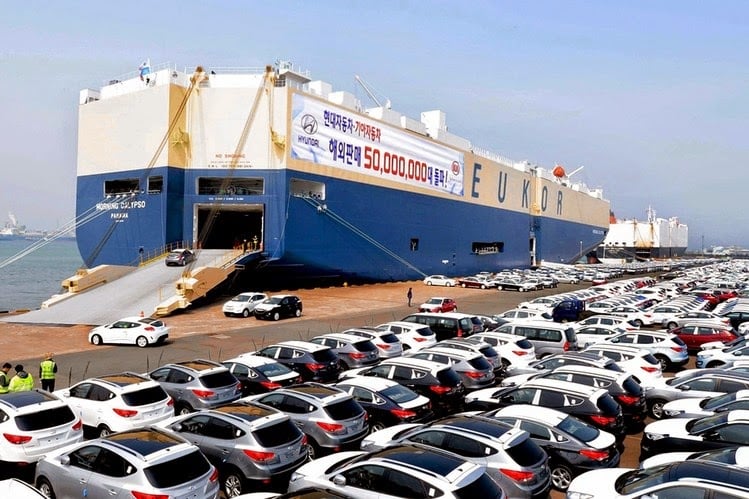
Think of the value of a Mini car made in the UK and exported abroad. With it being assembled domestically, the finished car counts as a UK export. However, a good portion of its total value (more than 60% in some cases) is added earlier in the supply chain by companies in other countries. The UK then imports the value of the parts and labour to complete the car production.
We believe in experts. We believe knowledge must inform decisions
So the UK’s export ranking may not accurately reflect its economic strengths and productive capability. The US$1.02 trillion headline may hide a large portion of value created far from the UK shores.
And the net value of the UK’s output produced domestically as a percentage of GDP (after adding all output and subtracting intermediate inputs) confirms this. This has been on a steady decline since the 1990s, reaching a value of 16.7% in 2022. On top of that, the value of imported intermediate inputs (the things the UK buys in to produce its finished products) increased in 2022 by 4.8% and 11.9% from EU and non-EU countries respectively. Both figures indicate an increasing UK reliance on imported goods.
So why is there a problem here? Since the exports are rising, even if the amount of value the UK feeds in is reduced, total exports still add value to the economy, right? Again, it’s not straightforward.
In 2022, there was an impressive rise in UK exports, but the data also shows an even faster increase in imports into the UK. This produced a trade deficit (when a country imports more than it exports) of almost £66.8 billion, the highest since 1989.
One reason for this was the Bank of England (BoE)’s aggressive cycle of interest rate hikes to combat inflation.
Raising UK interest rates attracts foreign investment, increasing demand for the pound, which strengthens its value. A stronger pound makes imports cheaper but exports more expensive, potentially leading to the UK importing more than it exports.
EGY Prestige is the trading name of EGY (UK) Ltd, which is a private company that specialises in the supply of new vehicles, approved used, VAT-free supply, freight-forwarding, legal services and consultancy (motor industry) and supply of duty free vehicles for, NGOs, Missions, Diplomats, and the Military.